
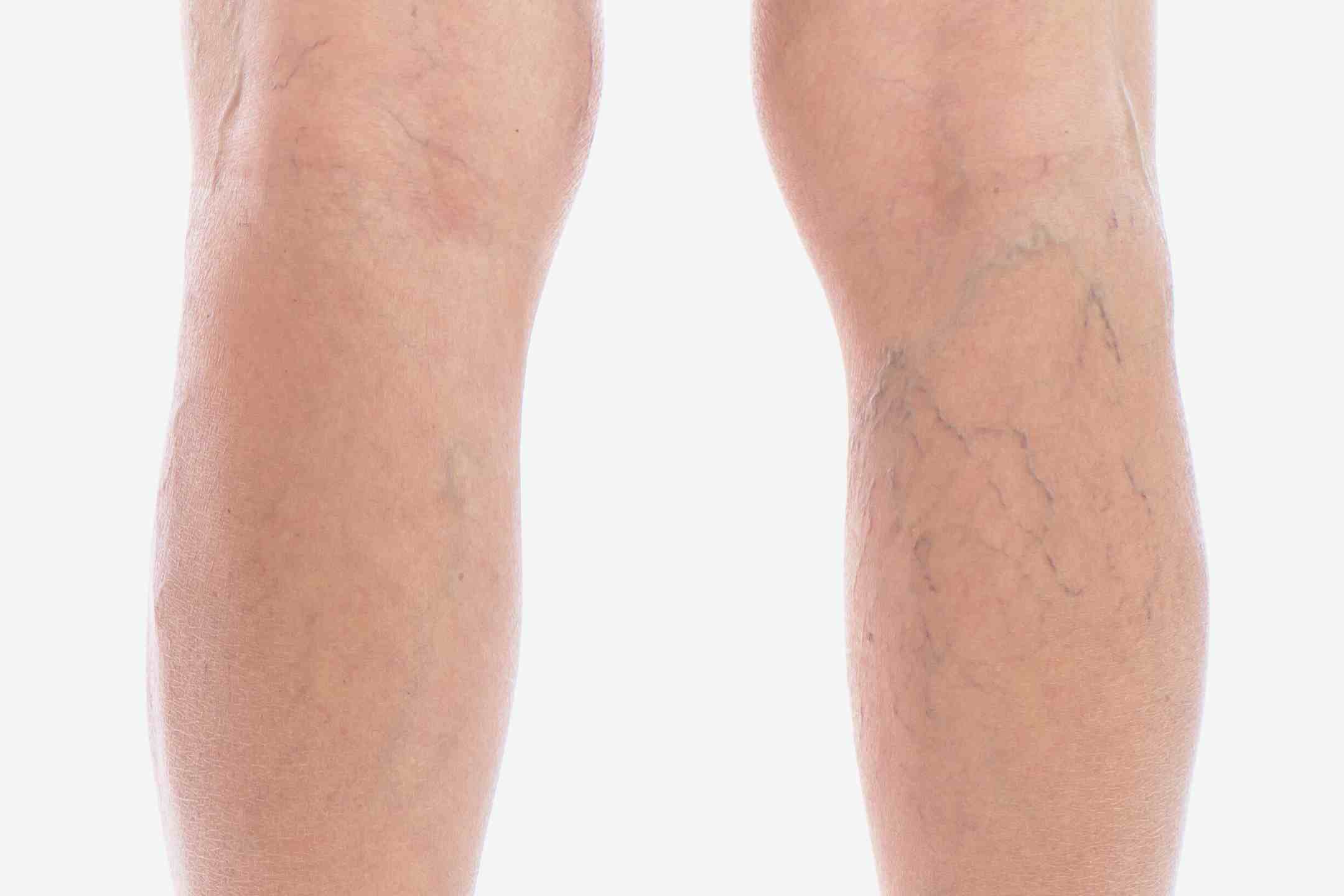
The biggest cause of varicose veins is failed valves inside the leg veins. When those one-way valves stop closing, blood flows backward, pools, and stretches the vein. The biggest risk factors for that valve failure are age, being female, family history, pregnancy, and extra weight. In a study of nearly half a million adults, height and a past deep vein clot also raised the risk.
Highlights:
- Failed valves are the direct cause. Blood that should flow up toward your heart leaks backward and stretches the vein.
- Age and genes top the list. A study of 493,519 adults found age, sex, obesity, pregnancy, past deep vein clots, and height were the strongest predictors.
- Tall people have a higher risk. The tallest quarter of people had a 74% higher risk than the shortest quarter, and genetic analysis suggests height plays a causal role.
- Your job matters. Women who stood or walked for most of the workday had an 82% higher risk of hospital treatment for varicose veins in a 12-year study.
- Some causes are secondary. A past blood clot, heart failure, or a compressed pelvic vein can damage leg veins too.
In this article
- What is the biggest cause of varicose veins?
- How varicose veins form
- The biggest risk factors, ranked by evidence
- Primary vs. secondary causes
- Risk factors you can and can't change
- What varicose veins can be a warning for
- How a vein specialist finds the cause
- Frequently asked questions
What is the biggest cause of varicose veins?
The biggest cause is valve failure in the leg veins, a condition called venous reflux.
Leg veins carry blood uphill to your heart, and one-way valves keep it from sliding back down. When a valve weakens or stops sealing, blood flows backward and pools. The pressure stretches the vein until it bulges and twists near the skin's surface.
That backward flow is the root of chronic venous insufficiency. Most varicose veins are its most visible sign.
Why do valves fail in the first place? The 2020 update to the international vein disease classification describes the most common type as a degenerative process: the valve or vein wall weakens and widens over time, leading to reflux. Age, genes, hormones and pressure on the legs all speed that process up.
How varicose veins form
Varicose veins usually form in stages as pressure builds.
- A valve weakens. Often it's a valve in the great saphenous vein, which runs from your ankle to your groin.
- Blood leaks backward. Each time you stand, blood slides down past the faulty valve.
- Pressure climbs. The pooled blood raises pressure in the vein below, which strains the next valve.
- The vein stretches. Over time, the vein widens, twists and bulges, and nearby branches can fail too.
This is why varicose veins tend to spread and worsen over time without treatment.
The biggest risk factors, ranked by evidence
The strongest risk factors come from large studies, not guesswork.
The largest is a study of 493,519 adults in the UK Biobank, published in Circulation. Researchers used machine learning to rank risk factors and genetic analysis to test causes.
| Risk factor | What the research shows | Can you change it? |
|---|---|---|
| Age | One of the top predictors in the UK Biobank study. Valves and vein walls weaken over time | No |
| Female sex | One of the top predictors. Hormones relax vein walls | No |
| Family history and genes | 30 new gene regions linked to varicose veins, tied to vein development and limb biology | No |
| Pregnancy | One of the top predictors. A study found varicose veins in 72.7% of pregnant women | Partly, since many shrink after delivery |
| Extra weight | One of the top predictors. Extra weight adds pressure on leg veins | Yes |
| Past deep vein clot | One of the top predictors. Clots can scar and damage vein valves | Partly, by preventing new clots |
| Height | Tallest quarter had 74% higher risk than the shortest quarter | No |
| Standing at work | Women who stood or walked most of the day had 82% higher risk of hospital treatment | Yes, by moving more |
The height finding was new. Using genetic data, the researchers found evidence that being taller plays a causal role in varicose veins.
The standing finding comes from a 12-year study of the Danish working population. The researchers estimated prolonged standing accounted for about 22% of hospital treatments for varicose veins.
Primary vs. secondary causes
Doctors sort varicose veins by what caused the valve damage.
- Primary varicose veins are the most common. The valve or vein wall weakens on its own over time, without another disease behind it. Genes, age and hormones drive most of these.
- Secondary varicose veins come from another condition. The classification splits these into two groups.
- Damage inside the vein. A past deep vein thrombosis can scar the valves as it heals.
- Pressure from outside the vein. Obesity, heart failure, a compressed pelvic vein like May-Thurner syndrome, or long-term immobility can raise pressure in the leg veins.
- Congenital varicose veins are rare and come from vein malformations present at birth.
Tell your specialist about any past deep vein clot. "Overall, DVT is a rare condition," says Dr. Batra. But a clot that damaged the deep veins changes how treatment is planned.
Risk factors you can and can't change
You can't change your genes, age or height, but you can lower the pressure on your veins.
Risk factors you can't change:
- Age
- Female sex
- Family history
- Height
Risk factors you can influence:
- Weight. Extra weight is one of the strongest predictors, and it adds pressure to leg veins.
- Time on your feet. Walk for a few minutes every hour, and do ankle pumps when you sit or stand for long periods.
- Calf strength. Walking and calf raises help your calf muscle pump blood out of your legs.
- Compression. Compression stockings ease aching and swelling during long days.
Crossing your legs isn't a known cause of varicose veins, despite the common myth.
What varicose veins can be a warning for
Varicose veins can be a warning sign of chronic venous insufficiency, which tends to progress.
In the 13-year Edinburgh Vein Study, nearly half of people with vein disease got worse over time, and almost 1 in 3 people with varicose veins developed skin changes. Warning signs to watch for:
Red flags
- Aching, heaviness or swelling that gets worse through the day
- Darkening, itchy or hardened skin near the ankles, a sign of venous stasis dermatitis
- An open sore near the ankle that won't heal, a venous ulcer
- One leg suddenly swollen, painful or warm, which can be a deep vein clot and needs same-day care
How a vein specialist finds the cause
A vein specialist finds the cause with a standing duplex ultrasound.
The scan shows which valves are leaking, how far the reflux extends, and whether the deep veins are open or scarred from an old clot. Blood flowing backward for 500 milliseconds or longer is the usual threshold for reflux.
Knowing the cause decides the treatment. Most primary varicose veins are treated by closing the leaking vein in the office with radiofrequency ablation or VenaSeal, with ultrasound-guided sclerotherapy for smaller branches. Secondary causes, like a blocked pelvic vein, may need a different approach.
Frequently asked questions
Are varicose veins genetic?
Yes, genes play a large role. The UK Biobank study identified 30 new gene regions linked to varicose veins, many tied to how veins and limbs develop. Family history is one of the most consistent risk factors, though lifestyle factors like weight and time on your feet also matter.
Can standing all day cause varicose veins?
Standing all day raises your risk. In a 12-year Danish study, women who stood or walked for most of the workday had an 82% higher risk of hospital treatment for varicose veins. Moving every hour, doing ankle pumps and wearing compression stockings help offset the pressure.
Do varicose veins come from pregnancy?
Pregnancy is one of the strongest risk factors. Hormones relax vein walls, and the extra blood volume of pregnancy widens leg veins. One study found varicose veins in 72.7% of pregnant women, and the authors noted they tend to regress rapidly after delivery. Veins that remain may need treatment.
Why do men get varicose veins?
Men get varicose veins for the same core reason as women: failed valves. Age, family history, height, extra weight, a past deep vein clot and long hours on your feet all raise the risk. Women have higher risk overall, but men with symptoms benefit from the same evaluation and treatment.
Can varicose veins be prevented?
You can't fully prevent varicose veins if you're genetically prone, but you can lower the pressure that drives them. Stay active, manage your weight, move often during long days on your feet, and wear compression stockings if your legs ache. A vein ultrasound can catch reflux early.
What to do next
If varicose veins run in your family or your legs ache and swell, start with a standing duplex ultrasound. It shows which valve is failing and whether the cause is primary or secondary.
At Texas Vascular Institute, our vein specialists are led by Dr. Dev Batra, a double board-certified vascular and interventional radiologist. A self-pay consultation with ultrasound is $350, and we accept most major insurance plans.
We treat varicose veins at three North Texas locations:
- Dallas: 8330 Meadow Rd, #100, Dallas, TX 75231
- Plano: 4716 Alliance Blvd, Suite 180, Plano, TX 75093
- Hurst: 809 West Harwood Rd, Suite 101, Hurst, TX 76054
Call 972-646-8346 to book.