
NON-SURGICAL RELIEF FOR HIP OSTEOARTHRITIS
Discover Lateral Circumflex Artery Embolization (LCAE) to alleviate the symptoms of hip osteoarthritis.
Request ConsultationWHAT IS OSTEOARTHRITIS?
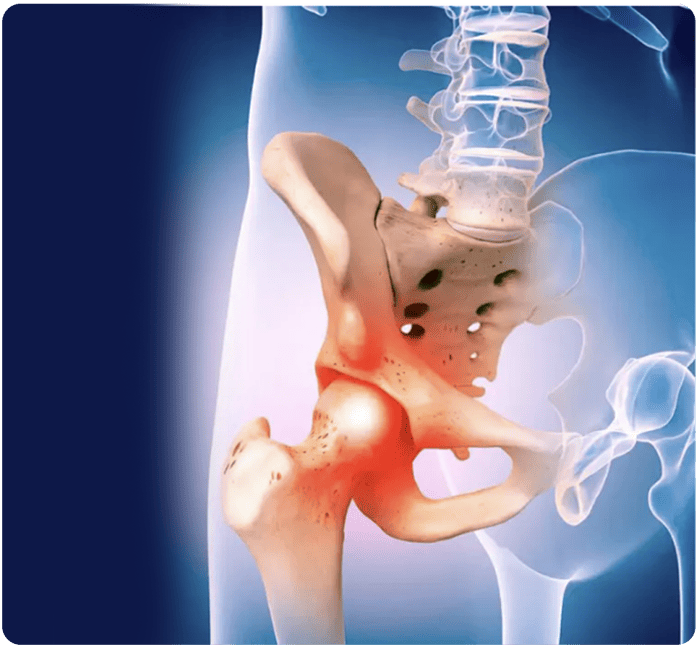
A degenerative joint disease where the protective cartilage cushioning your hip ball-and-socket joint gradually wears away. As the cartilage erodes, the joint space narrows, causing painful bone-on-bone rubbing, stiffness, and inflammation.
While osteoarthritis may present in any joint in your body,
it more often than not affects the knees, hips, and hands. Osteoarthritis is more common in older patients, but it can occur at any age, especially if there is a history of joint injury or overuse.
While osteoarthritis may present in any joint in your body,
it more often than not affects the knees, hips, and hands. Osteoarthritis is more common in older patients, but it can occur at any age, especially if there is a history of joint injury or overuse.
WHAT ARE THE SYMPTOMS OF HIP OSTEOARTHRITIS?
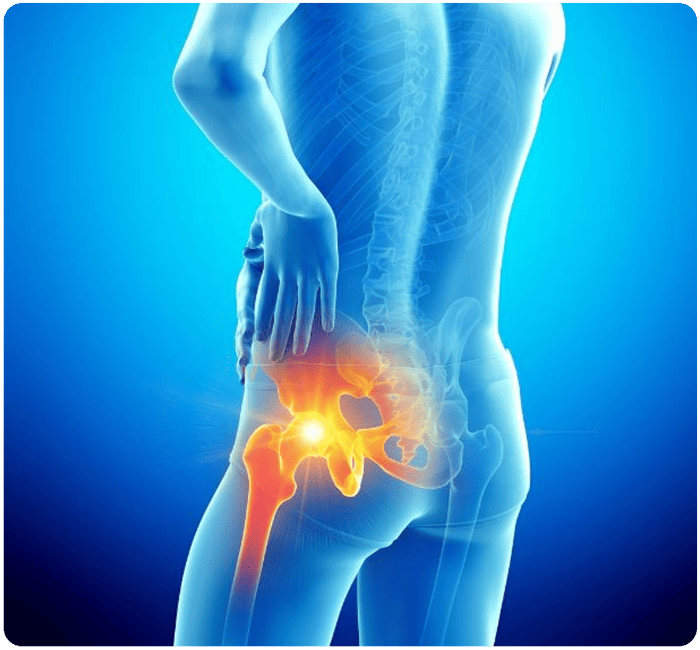
Hip osteoarthritis is commonly seen as "wear and tear," referring to the breakdown of cartilage in the hip joint. However, pain is not solely due to worn cartilage; as the joint deteriorates, inflammation occurs in the synovium, which lines the joint and produces lubricating fluid. Synovitis is the inflammation causing pain, stiffness, and tenderness in joints. A healthy joint has a smooth synovial lining and clear fluid, while an arthritic joint features a swollen, inflamed membrane. To support this inflammation, the body creates new blood vessels in the synovium, which carry inflammatory signals and nerve irritation, leading to joint pain.
YOUR DAILY EXPERIENCE MIGHT INCLUDE:
YOUR DAILY EXPERIENCE MIGHT INCLUDE:
- Deep, aching pain in the groin or buttock
- Morning stiffness
- Limited range of motion
- Grinding sounds or joint locking during movement
- Pain and restricted movement can lead to a noticeable limp as the body compensates to reduce pressure
WHAT IS LATERAL CIRCUMFLEX ARTERY EMBOLIZATION (LCAE)?
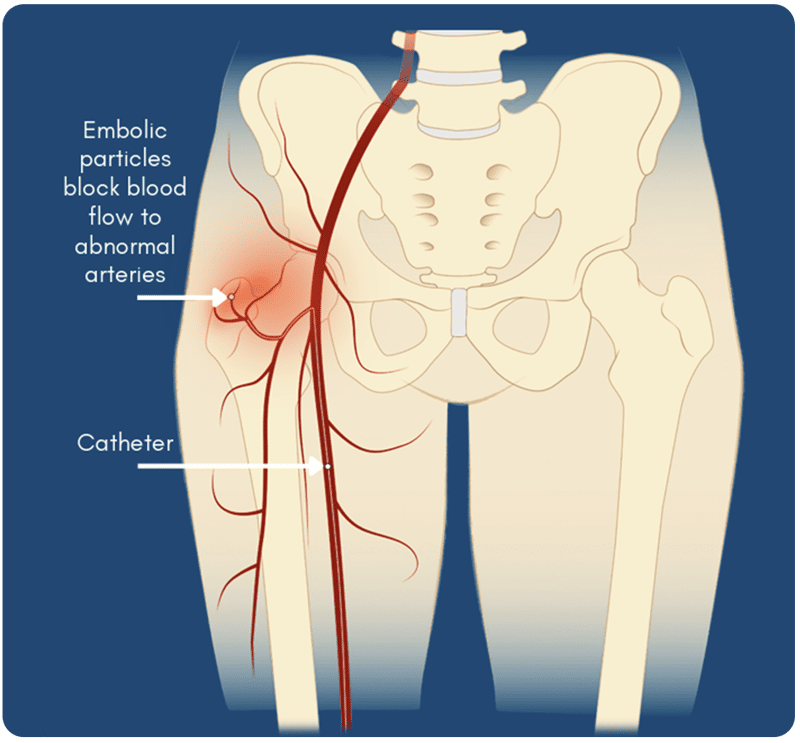
The LCAE procedure precisely targets and reduces blood flow to the abnormal blood vessels, calming the inflammation at its source. The result can be meaningful relief from pain-without surgery, large incisions, or a long recovery.
An interventional radiologist inserts a thin catheter through a small pinhole in the groin or wrist and guides it to the hip joint using X-ray imaging. Tiny embolic particles are injected into the abnormal arteries that drive inflammation. By shutting down this extra blood supply, pain signals are reduced. The procedure lasts about 45 to 60 minutes and does not require general anesthesia.
Symptom improvement typically begins 2 to 4 weeks after the procedure. Measured by the WOMAC index—a standard score for pain and function in osteoarthritis—patients see roughly a 50% reduction early on, improving to about 70% by 6 to 12 months.
An interventional radiologist inserts a thin catheter through a small pinhole in the groin or wrist and guides it to the hip joint using X-ray imaging. Tiny embolic particles are injected into the abnormal arteries that drive inflammation. By shutting down this extra blood supply, pain signals are reduced. The procedure lasts about 45 to 60 minutes and does not require general anesthesia.
Symptom improvement typically begins 2 to 4 weeks after the procedure. Measured by the WOMAC index—a standard score for pain and function in osteoarthritis—patients see roughly a 50% reduction early on, improving to about 70% by 6 to 12 months.
REASONS TO CONSIDER
LATERAL CIRCUMFLEX ARTERY EMBOLIZATION (LCAE)
Because interventional radiology spans such a wide range of procedures, extensive hands-on training matters. At Texas Vascular Institute, our interventional radiologists honed their LCAE
expertise at high-volume centers among the leading institutions worldwide.

Minimally invasive

Outpatient procedure

No general anesthesia

Preserves joint anatomy

Meaningful pain reduction

Improved mobility

Reduces medication reliance
Rapid recovery time
Meet Our Doctors
Expert Vein & Arterial Care with Advanced, Minimally Invasive Treatments
Dev Batra, MDVascular & Interventional Radiologist

Steve C. Hong, MDVascular & Interventional Radiologist

Kareem Elshatory, MDVein
Specialist
Specialist

Dr. Daniel Ahn, DOVein
Specialist
Specialist
Why Choose Us?
Trusted care recognized for results
You're In Good Hands With Our Team
Compassionate care team andcollaboration that educates and puts our patients at ease.

Stop Hiding Your Legs And Start Showing Them Off
Transformative results from pain,inactivity, and embarrassment to a more confident, active, and pain-free life.

Our Expertise: A Patient-First Focus
Highly trained, skilled specialists with a passion for improving the quality of lifefor our patients through minimally
invasive treatments.

Clarity From Day One,
Every Time
No Surprises—just clear explanations, upfront cost estimates, and guidance on your insurance options with most plans accepted.patients at Texas Vascular Institute
Real Reviews from Real PatientsTexas Vascular Institute always appreciates feedback from our valued patients.To date, we’re thrilled to have collected hundreds of reviews with an average rating of 5 out of 5 stars.
Insurance
We Make It Work for YouOur knowledgeable administrative team is hands-on throughout the entire process allowing you to be more hands-off. We understand the complexities of dealing with health insurance and we’re here to uncomplicate it for you.For help with any insurance-related question, we’re just a phone call away.