
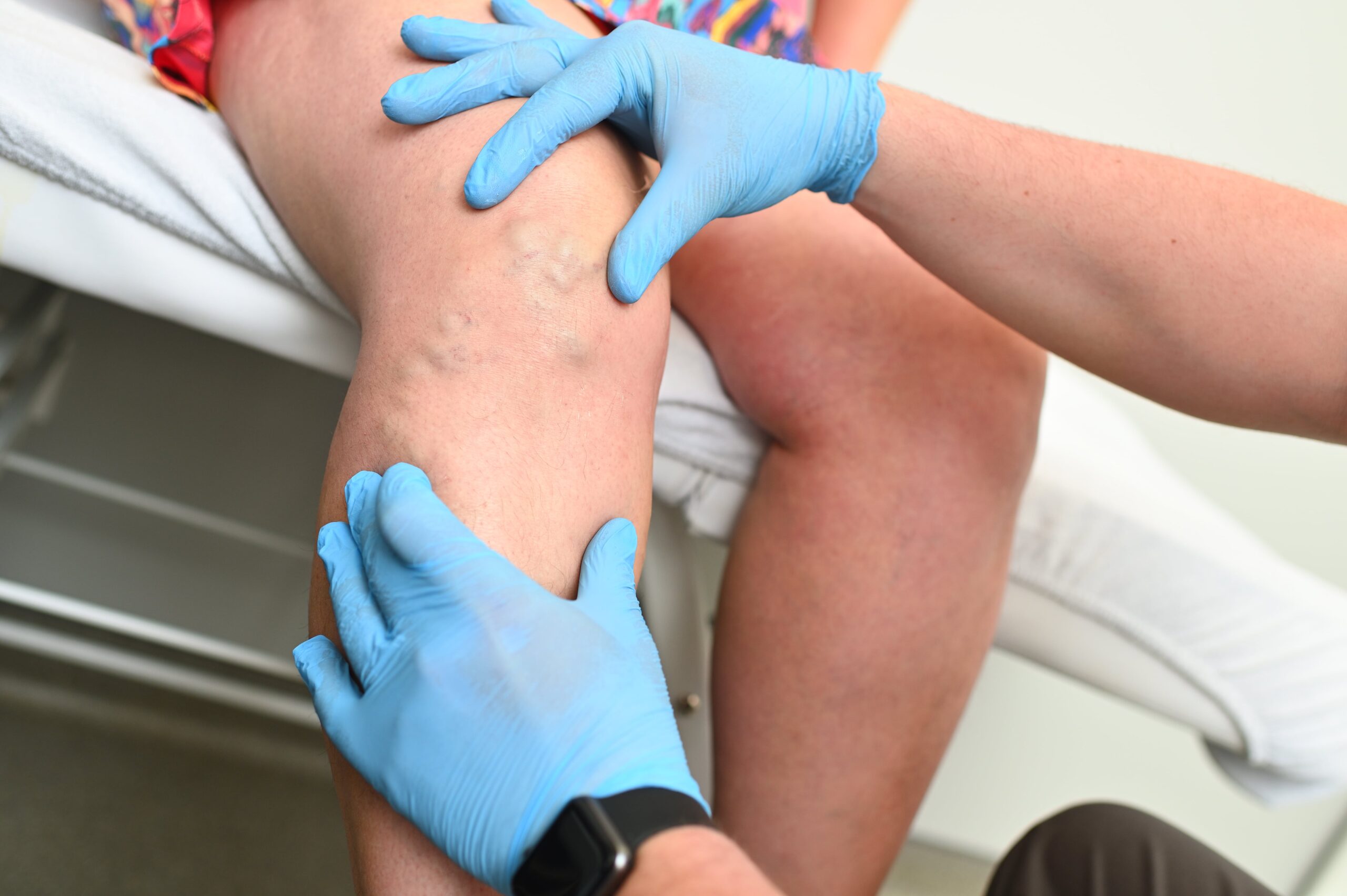
The best doctor for varicose veins is a board-certified vein specialist who maps your veins with a standing duplex ultrasound before choosing a treatment.
That specialist can be a vascular surgeon, an interventional radiologist, or a physician certified in venous and lymphatic medicine. The title on the door matters less than the training, the ultrasound, and the range of treatments the practice offers.
At Texas Vascular Institute, our vein team is led by Dr. Dev Batra, a double board-certified vascular and interventional radiologist.
Here is how to tell a good vein doctor from the rest, and who treats veins at our Dallas, Plano, and Hurst offices.
Highlights:
- Three specialties do most vein care: vascular surgeons, interventional radiologists and physicians certified in venous and lymphatic medicine.
- Dermatologists mainly treat spider veins, and primary care doctors usually refer you on.
- The ultrasound matters more than the title. Reflux has to be measured with you standing, and a good specialist maps it before recommending anything.
- Minimally invasive closure is the standard. National vascular guidelines recommend endovenous ablation over vein stripping surgery.
- Watch for over-treatment. In one Medicare review, 106 of 2,462 physicians averaged more than 3.4 vein ablations per patient, against a national average of 1.9.
- In North Texas, TVI's vein doctors see patients in Dallas, Plano, and Hurst.
In this article
- What kind of doctor is best for varicose veins?
- Why the ultrasound matters more than the specialty
- Vascular surgeon vs. interventional radiologist for varicose veins
- What a good vein specialist checks at your first visit
- Red flags when choosing a vein doctor
- Questions to ask before you book
- How to find the best vein doctor in Dallas
- Meet the vein specialists at Texas Vascular Institute
- Frequently asked questions
What kind of doctor is best for varicose veins?
A board-certified vein specialist is the best doctor for varicose veins. In practice, that means one of three backgrounds.
| Type of doctor | Board certification | Main training | Treats varicose veins? | Best for |
|---|---|---|---|---|
| Interventional radiologist | American Board of Radiology | Image-guided, catheter-based procedures | Yes | Ultrasound-guided ablation, foam and adhesive closure |
| Vascular surgeon | American Board of Surgery (vascular surgery) | Arteries and veins, open and endovascular surgery | Yes | Vein disease alongside arterial disease or complex anatomy |
| Venous and lymphatic medicine specialist (phlebologist) | American Board of Venous and Lymphatic Medicine | Vein and lymphatic disease specifically | Yes | The full range of outpatient vein treatment |
| Dermatologist | American Board of Dermatology | Skin conditions | Mostly spider veins | Small cosmetic surface veins |
| Primary care doctor | Family or internal medicine | General health | Diagnoses and refers | The first conversation about leg symptoms |
"Phlebologist" is a common name for a vein doctor rather than a separate residency. Many phlebologists hold the venous and lymphatic medicine board certification, granted by the American Board of Venous and Lymphatic Medicine, founded in 2007.
Varicose veins are usually a sign of chronic venous insufficiency, where the valves inside a vein fail and blood pools in the leg. So the right doctor treats the leaking vein underneath, not only the bulge you can see.
Why the ultrasound matters more than the specialty
Two board-certified doctors can give you very different care. The difference usually comes down to whether they find the source of the problem before they treat it.
The 2022 national guidelines for varicose veins from the Society for Vascular Surgery, American Venous Forum, and American Vein and Lymphatic Society say the reflux scan should be done with the patient standing, because reflux can be missed when you're lying down.
"Too frequently we see patients who've been living with the uncomfortable symptoms of reflux for multiple years but have never been made aware that their leg veins are the culprit," says Dr. Batra.
Part of the reason is that leg veins get waved off as a cosmetic issue: "We often hear from our medical peers that vein disease is 'just a cosmetic issue,' but what we'd like to hear more often is that cosmetic vein issues may be a sign of a more serious vascular problem."
Dr. Batra's advice to fellow doctors: "If any visible vein anomalies are present, taking an additional 30 seconds to ask about heaviness, tingling, restless legs, and night cramps may differentiate clinically significant venous disease."
You can run that same check on yourself. Heavy, achy legs by evening, cramps at night, restless legs, or itchy skin near the ankles all point to more than a cosmetic concern.
Vascular surgeon vs. interventional radiologist for varicose veins
Both can treat varicose veins well. Today, most treatment happens through a needle entry in the office, and both specialties are trained in that kind of care.
The same national guidelines recommend endovenous ablation over high ligation and stripping, the older surgery that pulled the vein out through incisions.
Dr. Batra's article on vein removal surgery explains why stripping has fallen out of favor: minimally invasive treatments have "proven to provide patients with faster recovery time and lower complication rates than the surgical alternative."
Where the two backgrounds differ:
- Interventional radiologists spend their training guiding catheters with imaging. Ultrasound-guided vein closure is a natural fit.
- Vascular surgeons train in open and catheter-based surgery of arteries and veins. That's useful when vein disease comes with blocked arteries or needs an open operation.
For most people with bulging, aching varicose veins, either one is a strong choice. The better question is how many vein patients the doctor treats and which closure methods the practice offers.
What a good vein specialist checks at your first visit
A thorough first visit covers five things.
- Your symptoms and history. Aching, heaviness, swelling, cramps, itching, past blood clots, and pregnancies.
- Your stage of vein disease. Doctors grade it on the CEAP scale, from spider veins (C1) to open ulcers (C6).
- A standing duplex ultrasound of both legs. It measures how long blood flows backward, and 500 milliseconds or more counts as reflux.
- The deep veins. A blockage or old clot changes the plan, so it has to be ruled out.
- A plan for each leg. Which vein to close first, with which method, and what follow-up the branches need.
If a practice skips the ultrasound and goes straight to injections, that's a reason to get a second opinion.
Red flags when choosing a vein doctor
Red flags
- No ultrasound before treatment. Surface injections without a reflux scan can miss the vein that's feeding the problem.
- Spider vein treatment with no questions about symptoms. Spider veins can sit on top of reflux in a bigger vein.
- Only one treatment on the menu. Veins differ in size and shape. A practice that offers only one method fits every leg to that method.
- A long list of veins to close at the first visit. Nationally, Medicare patients average about 1.9 vein ablations each.
That last point is backed by data.
A peer-reviewed project run through the vein physicians' professional society checked Medicare billing for vein ablation. Of 2,462 physicians, 106 averaged more than 3.4 ablations per patient, against a national average of 1.9.
If your plan includes many separate ablations, ask why each one is needed and what the ultrasound showed for each vein.
Questions to ask before you book
- Are you board-certified, and in which specialty?
- How many vein patients do you treat each week?
- Will I get a standing duplex ultrasound, and who reads it?
- Which closure methods do you offer: radiofrequency, laser, adhesive, foam?
- How many veins do you plan to treat in each leg, and why?
- Do you check my insurance and give me a cost estimate first?
- Who do I call if my leg is sore or swollen after the procedure?
How to find the best vein doctor in Dallas
There's no single "best" vein doctor for everyone. The best one for you checks the boxes above and is close enough that follow-up visits aren't a burden.
In the Dallas area, start with four checks.
- Board certification. Look it up on the certifying board's website.
- A vein-focused practice. Vein care should be a main part of the practice, not an add-on.
- Several treatment options under one roof. Radiofrequency ablation, adhesive closure, foam, and ultrasound-guided sclerotherapy.
- Patient reviews that mention results and recovery, not only friendly staff.
Then check that the practice takes your insurance. Most plans cover vein treatment when the ultrasound shows reflux, and your symptoms affect daily life.
Meet the vein specialists at Texas Vascular Institute
Texas Vascular Institute treats vein and arterial disease at three North Texas offices.
Dev Batra, MD, is the founder and medical director of Texas Vascular Institute. Dr. Batra is double board-certified in vascular and interventional radiology, with more than 15 years of experience. Dr. Batra trained at Creighton University School of Medicine, with residency and fellowship at Michigan State University and the University of Colorado.
Daniel Ahn, DO, DABVLM, sees vein patients at our Dallas office. Dr. Ahn is a Diplomate of the American Board of Venous and Lymphatic Medicine and focuses on early treatment of venous reflux.
Kareem Elshatory, MD, leads vein care at our Hurst office. Dr. Elshatory brings more than 20 years of experience in vein care, covering everything from everyday varicose veins to complex venous disease.
Thomas McCrorey, MD, treats vein disease and venous ulcers at our Plano office. Dr. McCrorey has more than 35 years of experience devoted to venous disease and wound care, and served as a surgeon in the U.S. Army.
Ankit Mehta, MD, is a dual board-certified interventional radiologist and former UT Southwestern faculty member. Dr. Mehta handles complex venous interventions along with embolization procedures.
Our vein team offers radiofrequency ablation, VenaSeal, Varithena foam, laser closure, and ultrasound-guided sclerotherapy, all as outpatient procedures under local anesthesia. We accept most major insurance plans, and our team checks your benefits before treatment.
Find us at three North Texas locations:
- Dallas: 8330 Meadow Rd, #100, Dallas, TX 75231
- Plano: 4716 Alliance Blvd, Suite 180, Plano, TX 75093
- Hurst: 809 West Harwood Rd, Suite 101, Hurst, TX 76054
Call 972-646-8346 to book with any of our varicose vein specialists.
Frequently asked questions
What is the best doctor to see for varicose veins?
A board-certified vein specialist: an interventional radiologist, a vascular surgeon, or a physician certified in venous and lymphatic medicine. Look for a practice that does a standing duplex ultrasound before recommending treatment and offers several closure methods, so the treatment fits your veins.
Which doctor is best for veins in the legs?
For leg veins that ache, swell, or bulge, see a vein specialist, not a dermatologist. Dermatologists mainly treat small spider veins for appearance. A vein specialist checks for reflux in the larger veins underneath, which is usually what drives leg symptoms.
How do I choose a vein doctor?
Check board certification, ask whether you'll get a standing duplex ultrasound, and ask which treatments the practice offers. Ask how many veins they plan to treat per leg and why. Reviews that mention results and recovery are a better guide than reviews about the waiting room.
Is a vascular surgeon or an interventional radiologist better for varicose veins?
Both are well trained to treat varicose veins with minimally invasive closure. Interventional radiologists specialize in image-guided catheter procedures. Vascular surgeons also perform open surgery, which helps when vein disease comes with arterial disease. Experience with vein patients matters more than which of the two you pick.
What is the most successful treatment for varicose veins?
National guidelines recommend endovenous ablation over stripping surgery. In a randomized trial, 4.8% of veins treated with radiofrequency ablation and 5.8% treated with laser were still open and leaking at one year, compared with 16.3% after foam alone. Many patients also need foam or microphlebectomy for smaller branches.
Do I need a referral to see a vein specialist?
It depends on your plan. PPO plans usually let you book directly, while HMO plans often need a referral from your primary care doctor. At Texas Vascular Institute, our team can tell you whether your plan requires one.
Is a phlebologist a real doctor?
Yes. A phlebologist is a medical doctor who focuses on vein disease. The term describes the focus of the practice, and many phlebologists are board-certified in venous and lymphatic medicine on top of their original specialty, such as radiology, surgery or internal medicine.