
Modern varicose vein treatment is usually mildly uncomfortable rather than painful. In a randomized trial, patients rated their pain afterward at 1.21 out of 10 after radiofrequency ablation, compared with 2.25 after old-style stripping surgery. In another trial, the procedure itself took about 19 minutes for radiofrequency ablation and 24 minutes for VenaSeal. Most people are back to normal activity within 1 to 2 days.
Highlights:
- Most of the discomfort is the numbing. You feel a few pinches from local anesthetic, then pressure or warmth while the vein closes.
- Pain afterward is low. Average scores ranged from 1.21 to 2.58 out of 10 across four treatments in a 500-patient trial.
- The procedure is short. Vein closure took about 19 to 24 minutes in a head-to-head trial.
- Recovery takes days, not weeks. Patients were back to normal activity in a median of 1 day after radiofrequency ablation, compared with 4 days after stripping.
- Stripping surgery is largely a thing of the past. National guidelines recommend in-office vein closure over stripping for most patients.
In this article
- How painful is varicose vein surgery?
- What you feel during the procedure
- What you feel afterward
- How long does varicose vein surgery take?
- How long is recovery?
- Modern in-office procedures vs old stripping surgery
- When pain after treatment isn't normal
- How to make your procedure more comfortable
- Frequently asked questions
How painful is varicose vein surgery?
Varicose vein treatment today is mildly uncomfortable for most people, and far less painful than the stripping surgery many patients picture.
The best comparison comes from a randomized trial of 500 patients that tested four treatments for the great saphenous vein, the most common source of leg varicose veins.
Patients rated their pain on a 0 to 10 scale and tracked how fast they got back to normal.
| Treatment | Where it's done | Pain afterward (0 to 10) | Back to normal activity (median) | Time off work (average) |
|---|---|---|---|---|
| Radiofrequency ablation | Office, local anesthesia | 1.21 | 1 day | 2.9 days |
| Foam sclerotherapy | Office, no incisions | 1.60 | 1 day | 2.9 days |
| Laser ablation | Office, local anesthesia | 2.58 | 2 days | 3.6 days |
| Stripping surgery | Operating room, often under general anesthesia | 2.25 | 4 days | 4.3 days |
Radiofrequency ablation had the lowest pain score and one of the fastest recoveries. VenaSeal wasn't part of this trial, but in its own trial against radiofrequency ablation, there was no significant difference in pain during the procedure.
What you feel during the varicose veins procedure
You're awake, and the main thing you feel is the numbing.
A typical radiofrequency ablation has three stages:
- A small needle stick. The specialist numbs a spot on your leg, usually near the knee or calf, and guides a thin catheter into the vein with ultrasound.
- Numbing along the vein. Several small injections of numbing fluid surround the vein. This is the part most people notice, and it feels like a series of pinches or stings.
- Pressure or warmth. As the catheter heats and seals the vein, you may feel pressure, tugging or mild warmth. Sharp pain isn't expected.
VenaSeal skips the row of numbing injections along the vein, because it seals the vein with medical adhesive instead of heat. You still get one numbing shot where the catheter goes in.
Ultrasound-guided sclerotherapy uses a fine needle to inject foam or liquid into smaller veins. You feel a brief sting at each injection.
What you feel afterward
Expect tenderness, tightness and some bruising along the treated vein for a few days to a couple of weeks.
- Tightness. The closed vein can feel like a firm cord or a pulled muscle while your body absorbs it.
- Tenderness. It's usually mild and eases with walking.
- Bruising. In a review of 17 randomized trials00053-X/fulltext), bruising was reported in 3.1% of legs after radiofrequency ablation, compared with 34.5% after laser and 36.1% after stripping surgery.
Most people manage with walking, compression stockings and the pain reliever their specialist recommends. At TVI, we recommend compression stockings for 3 to 5 days after ablation.
How long does varicose vein surgery take?
The procedure itself usually takes well under an hour.
In a randomized trial of 222 treated patients, average procedure time was about 19 minutes for radiofrequency ablation and 24 minutes for VenaSeal.
Plan for extra time at the visit for prep, ultrasound mapping and a short check afterward. If you're also having microphlebectomy to remove bulging surface veins, that adds time.
The full timeline from first visit to treated veins is usually longer than the procedure:
| Step | How long it takes |
|---|---|
| Consultation and duplex ultrasound | One visit |
| Compression trial, if your insurance requires it | 2 to 4 weeks on some plans, up to 3 months on others |
| Insurance approval | Varies by plan |
| Vein closure | Under an hour |
| Back to normal activity | 1 to 2 days for most people |
| Follow-up ultrasound | Shortly after treatment |
If you're paying on your own, you can skip the compression trial and insurance steps. Many plans also waive the trial for skin changes, ulcers or a bleeding vein.
How long is recovery?
Most people walk out of the office and are back to normal activity in 1 to 2 days.
In the 500-patient trial, the median return to normal activity was:
- 1 day after radiofrequency ablation or foam
- 2 days after laser ablation
- 4 days after stripping surgery
Average time off work ranged from 2.9 days after radiofrequency ablation to 4.3 days after stripping. Your specialist will tell you when to go back to hard workouts, heavy lifting or long flights.
Walking is part of recovery, starting the same day. It keeps blood moving through your healthy veins and eases the tightness.
Modern in-office procedures vs old stripping surgery
Vein stripping pulls the vein out through incisions, usually in an operating room. Modern procedures close the vein from the inside through a needle entry in the office.
The differences show up clearly in research:
- Pain. Radiofrequency ablation scored 1.21 out of 10 afterward, compared with 2.25 for stripping.
- Recovery. A median of 1 day back to normal activity after radiofrequency ablation, compared with 4 days after stripping.
- Complications. In a UK trial of 798 patients, procedural complications occurred in 1% of patients after laser ablation, compared with 7% after surgery.
- Bruising and pooled blood. Pooled blood under the skin (hematoma) occurred in 0.2% of legs after radiofrequency ablation, compared with 13.5% after stripping.
- Anesthesia. Vein closure uses local anesthesia, so you're awake and go home right after. Stripping often uses general or spinal anesthesia.
The 2022 national guidelines for varicose veins from the Society for Vascular Surgery, American Venous Forum and American Vein and Lymphatic Society recommend these in-office treatments over stripping for most patients.
Minimally invasive treatments have "proven to provide patients with faster recovery time and lower complication rates than the surgical alternative," says Dr. Batra.
When pain after varicose veins treatment isn't normal
Mild tenderness is expected. Some symptoms need a call to your specialist.
Red flags
- One leg swollen, warm or aching more each day. This can be a deep vein thrombosis, which is rare after vein closure but needs prompt care.
- Chest pain or trouble breathing. Call 911.
- Pain that gets sharply worse instead of better. Call your specialist the same day.
- Redness that spreads, fever or drainage from a needle site.
A follow-up ultrasound after treatment checks that the vein closed and that the deep veins are clear.
How to make your procedure more comfortable
A few simple steps make the day easier.
- Wear loose, comfortable clothing that fits easily over your compression stockings.
- Plan a short walk afterward. Walking right after treatment eases tightness.
- Tell your specialist if you're nervous. Knowing what each step will feel like helps.
- Keep your follow-up visit. It confirms the result and catches any issue early.
Frequently asked questions
Will I be awake during varicose vein treatment?
Yes. Radiofrequency ablation, VenaSeal and sclerotherapy are done under local anesthesia, so you're awake and can talk with your specialist throughout. The numbing injections are the part most people feel. General anesthesia is mainly used for old-style stripping surgery.
Will I be able to walk after varicose vein surgery?
Yes, right away. Patients walk out of the office after radiofrequency ablation, VenaSeal or foam, and walking is part of recovery. In a randomized trial, people returned to normal activity in a median of 1 day after radiofrequency ablation.
How many days should I rest after varicose vein surgery?
Most people don't need bed rest. After in-office vein closure, you walk the same day and return to normal activity in 1 to 2 days. Average time off work in a large trial was 2.9 days after radiofrequency ablation and 4.3 days after stripping surgery. Your specialist will tell you when to resume hard exercise.
Is it a good idea to have varicose veins stripped?
For most people, no. National guidelines recommend in-office vein closure over stripping because it causes less pain, less bruising and a faster recovery. In trials, stripping had far more bruising and pooled blood under the skin and a longer return to normal activity than radiofrequency ablation.
Does VenaSeal hurt less than radiofrequency ablation?
VenaSeal skips the row of numbing injections along the vein, which means fewer needle sticks. In its main trial, though, pain during the procedure wasn't significantly different from radiofrequency ablation. Both are quick, done in the office, and let you walk out the same day.
What to do next
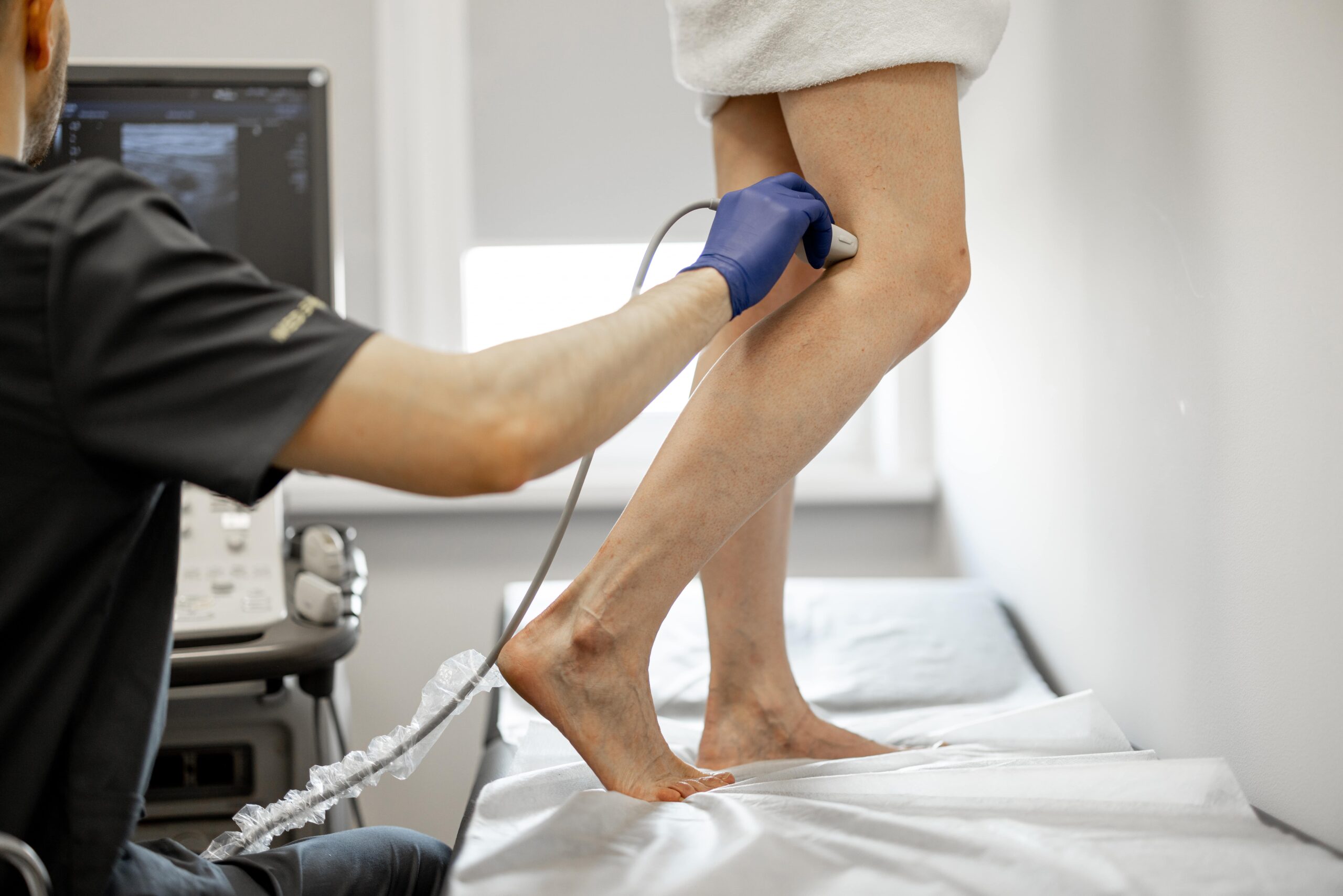
Start with a standing duplex ultrasound. It shows which vein is leaking and which procedure fits it, so you know exactly what your treatment day and recovery will look like.
At Texas Vascular Institute, our vein specialists are led by Dr. Dev Batra, a double board-certified vascular and interventional radiologist. A self-pay consultation with ultrasound is $350, and we accept most major insurance plans.
We treat varicose veins at three North Texas locations:
- Dallas: 8330 Meadow Rd, #100, Dallas, TX 75231
- Plano: 4716 Alliance Blvd, Suite 180, Plano, TX 75093
- Hurst: 809 West Harwood Rd, Suite 101, Hurst, TX 76054
Call 972-646-8346 to book.